
Mold Containment in San Jose: Stop the Spread and Protect Your Home
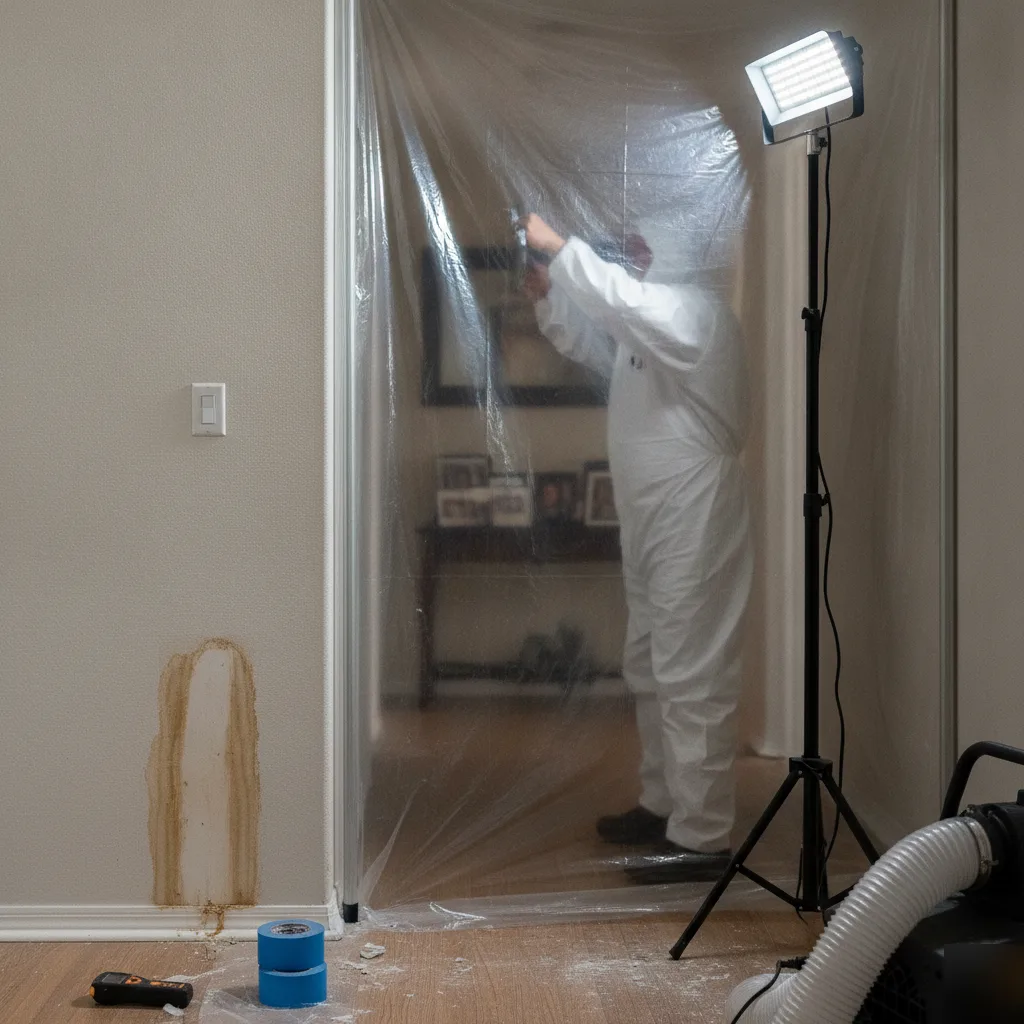
Mold containment stops airborne spores from reaching clean rooms while remediation work is underway. Our IICRC S520-certified crews install physical plastic barriers, establish negative air pressure, seal HVAC ducts, and run HEPA air scrubbers throughout the job — starting with moisture source mapping before any barrier goes up.
What's Covered on This Page
Diagnose the Moisture Source Before Containment Begins
Quick Summary: Mold containment only works if the moisture feeding the mold gets found first. We use moisture mapping and monitoring to find wet zones behind walls, under floors, and in crawl spaces before we ever set up a containment barrier.
You can not seal off mold if water is still leaking behind the wall. That is the mistake we see all the time.
Before we tape a single sheet of plastic, our team tracks down where the moisture is coming from. Moisture mapping and daily monitoring show us the wet zones, not just the moldy ones. We use meters and thermal imaging to read moisture inside drywall, subfloors, and crawl spaces.
Common Hidden Moisture Sources We Find in San Jose Homes:
- Plumbing leaks hidden behind walls or under sinks.
- Roof and ceiling leaks that soak insulation over time.
- Appliance leaks from water heaters, dishwashers, or washing machines.
- Crawl space humidity from poor ventilation or improper grading.
- Slab leaks running under the foundation.
In Willow Glen, for example, many homes built before 1950 still have vented crawl spaces. Those pull in ground moisture every winter, and it feeds mold along the floor joists long before anyone smells anything upstairs.
Skip this step, and you are just buying time. The moisture source is hiding somewhere nobody thought to check. Once we find it, containment holds — because we are not just covering a symptom, we are stopping what is causing it.
What Happens During a Mold Containment Setup
Once we are on-site, we do not just start tearing into drywall. We walk the space first, moisture meter in hand, checking behind walls and under flooring for where the water is hiding. The visible mold is only half the story.
Moisture Mapping & Containment Boundary
We map the affected area and mark the containment boundary with moisture readings — not guesswork. Every boundary decision is instrument-based.
Physical Plastic Barrier Installation
We hang heavy plastic sheeting floor to ceiling, taping off doorways, vents, and any gap air could sneak through. No shortcuts on sealing.
Negative Air Pressure with HEPA Air Scrubber
We set up negative air pressure with a HEPA air scrubber, pulling contaminated air out and venting it away from living space. This is the IICRC S520 standard for containment.
HVAC Duct Sealing
We shut down or seal HVAC ducts running through the containment zone so spores cannot travel through the ductwork into adjacent clean rooms.
Debris Bagging & Removal
All contaminated material is bagged and sealed inside the containment area before it ever leaves the workspace.
We see this a lot in older San Jose homes near Willow Glen, where crawl spaces were built without modern vapor barriers. Moisture creeps up through the foundation and mold sets in before anyone notices a smell. Setup usually takes an hour or two, sometimes longer if the space is tight or the ductwork is complicated.
See our full mold remediation processMold Containment in San Jose After Storms and Roof Leaks
San Jose's rainy season runs November through March, and that is when our phone rings the most. A roof leak that started during a storm does not stay a roof leak for long. Water gets into the attic, soaks the insulation, and finds drywall. Give it 48 hours in a warm, closed-up attic space and you have mold — not just a wet spot.
Older homes around Willow Glen and the Rose Garden area still have original composition shingle roofing on houses built decades ago. Those roofs show their age during a hard winter storm. Flat-roofed mid-century homes near Cambrian Park have a different problem: ponding water finds the smallest gap and drips for days before anyone notices.
The Ceiling Stain Is the Smallest Part of the Problem
What is happening above the drywall — in the attic framing and insulation — is usually worse than what you see. A stain the size of your palm on the ceiling can hide saturated insulation and active mold growth across several feet of framing above it.
So what do we do? We seal off the affected attic or ceiling area with physical barriers before any tear-out starts. That is mold containment. It stops spores from riding the HVAC system into your bedrooms while our team works. Air scrubbing and HEPA filtration run inside the sealed zone the whole time, pulling spores out of the air instead of letting them settle somewhere new.
Have questions? We're happy to help.
Get a Free Estimate. First Response Water Mold Fire is ready to help.
We see roof-leak mold jobs every winter. The pattern is almost always the same: a homeowner waits a week hoping it dries out on its own, and by the time we get there the insulation is already growing. Do not wait on that one.
When Small Mold Spots Don't Need Full Containment
Not every mold spot needs a crew, plastic sheeting, and negative air machines. Sometimes it is just a small patch on a bathroom ceiling tile or a corner of drywall near a leaky window. If it is smaller than about 10 square feet — roughly a card table — and on a hard, non-porous surface, you can often handle it yourself with gloves, a mask, and a bleach-free cleaner.
We see this a lot in older Willow Glen bungalows with single-pane bathroom windows and weak exhaust fans. Steam builds up, condensation sits on the ceiling, and a small black spot shows up. That is not a job for containment. That is a job for a scrub brush and better ventilation.
DIY Is Generally Fine When All of These Are True:
- The spot is smaller than roughly 10 square feet.
- It is on tile, glass, or sealed drywall — not raw wood or fabric.
- There is no musty smell traveling through the room.
- You can see the source (a fan that doesn't run, a window that sweats) and can fix it.
- The area dried out within 24 to 48 hours of the leak or moisture event.
But if any of those do not check out, stop scrubbing. Mold that has spread past a small patch, sitting on porous material like carpet or insulation, or tied to a hidden leak behind a wall is a different problem. So is anything that keeps coming back after you clean it. Recurring mold means there is an active water source still hiding in the wall or under the floor.
How Mold Containment Pricing Is Scoped and Verified
Mold containment pricing is not one flat number. It is based on scope. A technician has to assess square footage, how many rooms are affected, and whether the mold has reached the HVAC system before they can even start scoping the job.
Older homes near Willow Glen with original crawl spaces and shared ductwork often need bigger containment zones than a newer build. That is not upselling — that is physics. Air moves through those old duct runs, and if you do not seal the whole path, spores just travel to the next room.
What Determines the Scope and Cost of Containment:
- Size of the affected area and number of rooms involved.
- Whether HVAC ductwork needs to be sealed off separately.
- Type of surface: drywall versus hardwood versus crawl space framing.
- How many entry and exit points the containment barrier needs.
- Air scrubber and HEPA filtration run time required to clear the space.
Questions to Ask Before You Hire Anyone:
Will they document the containment with photos before demo starts? Will they use air scrubbing or HEPA filtration during the work, not just after? And will they bill your insurance directly, or leave you to sort out reimbursement on your own?
We offer a free on-site estimate so you get real scoping before any work begins — not a guess over the phone. Our team also handles direct insurance billing, so the containment plan and the paperwork move together.
Verification matters as much as the price. A containment job is not finished when the plastic comes down; it is finished when air testing or a visual clearance check confirms the spores did not spread past the barrier.
Call 408-202-9356 for a Free EstimateCommon Questions About Mold Containment
Common questions about Mold Containment
How fast can you set up mold containment once I call?
We aim to get on-site quickly, especially during rainy season when calls spike. Setup itself usually takes an hour or two once we arrive, sometimes longer if crawl spaces or ductwork are complicated. We start with moisture mapping before touching anything, so the visit includes diagnosis time, not just containment work. Calling as soon as you spot a leak or musty smell keeps the mold from spreading into a bigger job. Waiting even a few days lets moisture soak deeper into walls and insulation.
What should I expect when your team arrives to contain mold?
We walk the space first with a moisture meter before setting up any barriers. You will see us checking behind walls and under flooring to find where water is hiding, since visible mold is only half the picture. Once we mark the containment boundary, we hang plastic sheeting floor to ceiling, seal HVAC ducts running through the area, and run a HEPA air scrubber under negative pressure. This follows IICRC S520 protocol, so spores stay sealed inside the work zone instead of spreading through your home.
Why do older San Jose homes have more mold containment issues?
Many homes built before 1950 in Willow Glen still have vented crawl spaces that pull in ground moisture every winter. That moisture feeds mold along the floor joists long before anyone smells it upstairs. Flat-roofed mid-century homes near Cambrian Park have a different problem: ponding water finds gaps and drips for days unnoticed. Both situations mean mold often starts hidden, out of sight, which is why we always check crawl spaces and attics, not just the visible spot.
Does every mold spot need full containment?
No, small spots under about 10 square feet on hard surfaces like tile or sealed drywall often don't need containment. We see this a lot in older Willow Glen bathrooms with single-pane windows and weak exhaust fans, where steam causes small black spots. If the area dried within 24 to 48 hours and there is no musty smell, a scrub brush and better ventilation may be enough. But mold that keeps coming back usually means moisture is still hiding somewhere behind the wall.
Why does mold show up after roof leaks during San Jose's rainy season?
San Jose's rainy season runs November through March, and a wet attic can grow mold within about 48 hours if it stays warm and closed up. Older homes around Willow Glen and the Rose Garden area still have original composition shingle roofing that struggles during hard storms. We seal off the affected attic or ceiling with containment barriers before any tear-out starts, so spores can't ride the HVAC system into your bedrooms while we work.
Emergency Water Damage?
Pay Zero Upfront.
Direct insurance billing on covered claims with no hidden catch. Get immediate water damage repair & extraction in San Jose today. Contact us to book a free on-site estimate!
Feel Free to Contact Us or Book Services
First Response: Your best solution for accurate, immediate, and professional help for all your water damage repair and restoration needs in San Jose and Silicon Valley.
- 24/7 Friendly Support
- Professional IICRC-Certified Specialists
- 15+ Years Local Experience in San Jose
- Direct Insurance Billing & Itemized Claims
- Same-Day Water Damage Extraction