
Crawl Space Encapsulation in San Jose: Stop Moisture Before It Spreads
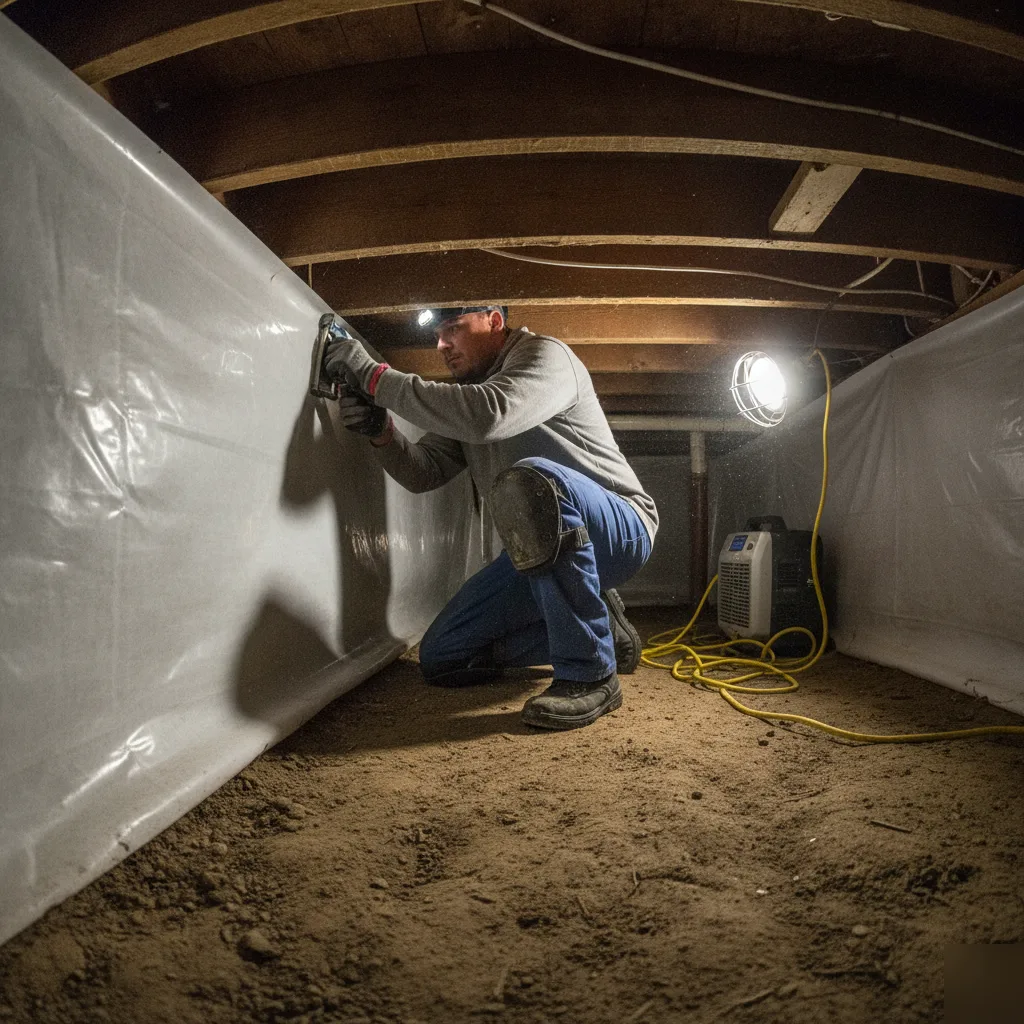
Older San Jose homes on clay soil trap winter rainwater under vented crawl spaces for weeks, feeding mold along floor joists before anyone smells anything upstairs. We seal the space with a continuous heavy-duty vapor barrier, close off vents, and verify dry conditions before we close the job.
What's Covered on This Page
Warning Signs Your Crawl Space Needs Attention
Quick Summary: Musty smells, cold or springy floors, visible mold on floor joists, and high humidity under the house are clear signs your crawl space needs attention. Older San Jose homes with vented crawl spaces sitting on clay soil hold moisture longer, which speeds up wood rot and mold growth if nothing gets sealed.
Crawl space problems rarely announce themselves. There is no leak spraying across the floor, no dramatic moment. Just a smell that gets a little worse each month, or a floor that feels cooler than it used to. By the time most people notice, the moisture has been sitting under the house for a while.
We see this every week. Someone calls about a musty smell in the kitchen, and it turns out the crawl space below has been damp for months.
Signs Your Crawl Space Needs a Professional Look:
- A musty or earthy smell that is strongest near floor vents or in low rooms.
- Floors that feel cold, soft, or slightly springy when you walk on them.
- Visible mold, dark staining, or fuzzy growth on the wood joists or subfloor.
- Condensation or wet dirt in the crawl space itself, especially after rain.
- Higher humidity indoors, foggy windows, or a musty basement-like feel in the house above.
Older neighborhoods like Willow Glen and the Rose Garden area have many homes built in the 1940s and 50s with vented crawl spaces set low to the ground. On clay soil, water from winter rains has nowhere to drain. It just sits there, soaking into the wood for weeks after storms pass. If your house fits that description, do not wait for the smell to get worse.
Vapor Barrier vs. Full Encapsulation: Know What You're Buying
Here is where many homeowners get confused — and some contractors let that confusion slide. A vapor barrier is a sheet of plastic laid loosely over the dirt floor. Full crawl space encapsulation is a sealed system. They are not the same job.
We walk into many homes in older sections of San Jose — places like Willow Glen and Rose Garden — where a previous owner rolled out thin plastic decades ago and called it done. It is usually torn, sagging, or covering maybe half the ground. That is not encapsulation. That is a start.
Vapor Barrier Only
- –Plastic sheeting on the ground only, seams often left unsealed.
- –No vapor control at foundation walls — moisture still wicks up through concrete.
- –Vents left open, allowing humid outside air to condense on cold joists.
- –Slows ground moisture but does not stop the full moisture cycle.
Full Encapsulation
- Heavy-duty liner sealed at seams, walls, and piers — one continuous barrier.
- Vents sealed or mechanically controlled, not left open to outside air.
- Often paired with a dehumidifier or drainage matting depending on the space.
- Stops both ground moisture and humid air infiltration.
A basic vapor barrier slows ground moisture. It does not stop humid outside air from getting pulled in through open vents and condensing on cold ductwork or floor joists. We see this every week — homeowners tell us they already had a vapor barrier installed, but the crawl space still smells musty and the wood joists are damp to the touch.
That damp, unaddressed moisture turns into a mold problem under the house. So if someone quotes you a low number for encapsulation, ask what is included. Plastic on the dirt is not the same job as a sealed system.
See our full mold remediation service overviewWhen Your Crawl Space Doesn't Need Encapsulation Yet
Not every crawl space needs a full seal job. Some are doing just fine, and we will tell you that straight if that is what we find.
Grab a flashlight and take a look down there yourself. Dry dirt, no water stains, no musty smell pushing up through your floor vents — that is a good sign. Homes built more recently often already have a vapor barrier laid down from the start. In that case, the space usually just needs a yearly check, not a full encapsulation.
Your Crawl Space Is Probably Fine If All of These Are True:
- Soil under the house is dry to the touch — no standing water or damp patches.
- No visible mold on the joists, subfloor, or insulation.
- Musty smell is faint or missing, not getting worse room by room.
- House was built with a vapor barrier already in place and it is intact.
- You have never had a pipe leak or flooding reach that crawl space.
Need help with Crawl Space Encapsulation?
Get a Free Estimate. First Response Water Mold Fire is ready to help.
Some cases sit in the middle. Maybe you noticed a little condensation on the pipes one cold January morning, but it dried up on its own and never came back. That is not the same as a crawl space with standing water after every storm. One is a fluke, the other is a pattern — and the difference matters.
If your space is dry and staying that way, save your money. We would rather tell you that now than have you pay for something you did not need.
Crawl Space Encapsulation in San Jose: How the Process Works
Once we are under the house, the job follows a consistent order. Older homes near Willow Glen and the Rose Garden area often have raised foundations with dirt floors, so the crawl space usually needs more prep than a newer build on a slab. We start with moisture mapping to find where water is getting in — not just where it looks wet.
Moisture Mapping & Inspection
We map moisture levels along foundation walls and soil to find where water is getting in. This tells us the actual source — not just where it has pooled.
Clear Out Old Material
Old insulation, debris, and any damaged wood or batting is removed before any barrier goes down. Encapsulating over wet or moldy material defeats the purpose.
Seal Foundation Vents & Gaps
Vents and gaps where outside air and pests enter are sealed off to stop humid air from condensing on cold joists and ductwork.
Heavy-Duty Vapor Barrier Installation
A thick vapor barrier is laid across the floor and up the piers, then every seam is taped and sealed so the barrier acts as one continuous layer.
Dehumidification & Drying Equipment
If the space has elevated moisture levels, a dehumidifier or structural drying equipment runs until moisture readings reach safe levels — we do not seal a wet space.
Post-Installation Moisture Verification
Moisture mapping and monitoring during and after the job tells us whether the barrier is holding. We do not close out a job on a visual check alone.
Important: If there is active mold on the framing, antimicrobial treatment happens before the barrier goes down — not after. Encapsulation seals the space. It does not remediate a mold problem that is already there.
What Drives the Cost of Crawl Space Encapsulation
Every crawl space is a little different, so every job prices out a little different. The size of the space matters most — bigger square footage means more vapor barrier material and more labor hours. But size is not the whole story.
Factors That Affect the Final Scope and Cost:
- How much moisture or standing water is already down there.
- Whether the vents need sealing or the crawl space needs a dedicated sump pump.
- The thickness and grade of the vapor barrier material used.
- How hard it is to physically get in and move around under the house.
- Whether insulation needs to come out first because it is wet or moldy.
That last one comes up a lot in older San Jose homes with low crawl space clearance. Getting a crew and materials through an eighteen-inch gap takes longer than a three-foot one.
Questions to Ask Before You Hire Anyone:
What thickness vapor barrier are they using? Are they sealing the vents or just laying plastic on the ground? Is a sump pump part of the plan, or are they hoping the slope handles it? A vague answer to any of those is a red flag.
We do a free on-site estimate before any work starts, so you see the actual condition of your crawl space and get a real plan — not a phone guess. If the damage came from a covered event like a burst pipe or appliance leak, we also handle direct insurance billing so you are not stuck managing paperwork on top of everything else.
Call 408-202-9356 for a Free EstimateCommon Questions About Crawl Space Encapsulation
Common questions about Crawl Space Encapsulation
How fast can you get someone out to look at my crawl space in San Jose?
We are locally based in San Jose and handle crawl space calls alongside our water and mold restoration work, so we can often get to your home the same week. If you are noticing a musty smell or damp floors, do not wait to call. The longer moisture sits under an older home in areas like Willow Glen, the more time mold has to spread across the joists. Call us and we will walk you through what to check before we even arrive.
What happens when your team shows up to inspect my crawl space?
We start by mapping moisture levels along your foundation walls and soil — not just looking for spots that look wet. This tells us where water is getting in, which matters more than where it pools. We will check your vents, piers, and any existing vapor barrier for damage. Then we walk you through what we found in plain terms, including whether your space needs encapsulation or just a smaller fix.
Why do older San Jose homes seem to have more crawl space moisture problems?
Many older homes in Willow Glen and the Rose Garden area were built in the 1940s and 50s with vented crawl spaces set low to the ground. On our clay soil, winter rainwater has nowhere to drain, so it soaks into the wood for weeks after a storm passes. If your home fits that description, moisture under the house can turn into mold faster than in a newer build on a slab.
What's the difference between a vapor barrier and full crawl space encapsulation?
A vapor barrier is just plastic sheeting laid over the dirt floor, while full encapsulation seals the entire space at the walls, piers, and vents. We often find old, torn plastic in San Jose crawl spaces that homeowners thought was encapsulation. It slows ground moisture but does not stop humid air from getting pulled in through open vents. If a contractor quotes a low number, ask exactly what is sealed — not just what is covered.
How do I know if my crawl space needs encapsulation?
Grab a flashlight and check for damp soil, musty smells, or mold on the joists. If the dirt is dry and there is no water staining, your crawl space may just need a yearly check instead of a full seal job. Homes built more recently often already have an intact vapor barrier. We would rather tell you your space is fine than sell you a job you do not need.
Can a musty smell in my house really be coming from the crawl space?
Yes, this is one of the most common calls we get in San Jose. A musty smell in the kitchen or another low room often traces back to a crawl space that has been damp for months without anyone noticing. Foggy windows or a basement-like feel indoors are other signs. Once we seal and dry the space properly, that smell usually clears up because the moisture source is gone.
Emergency Water Damage?
Pay Zero Upfront.
Direct insurance billing on covered claims with no hidden catch. Get immediate water damage repair & extraction in San Jose today. Contact us to book a free on-site estimate!
Feel Free to Contact Us or Book Services
First Response: Your best solution for accurate, immediate, and professional help for all your water damage repair and restoration needs in San Jose and Silicon Valley.
- 24/7 Friendly Support
- Professional IICRC-Certified Specialists
- 15+ Years Local Experience in San Jose
- Direct Insurance Billing & Itemized Claims
- Same-Day Water Damage Extraction